
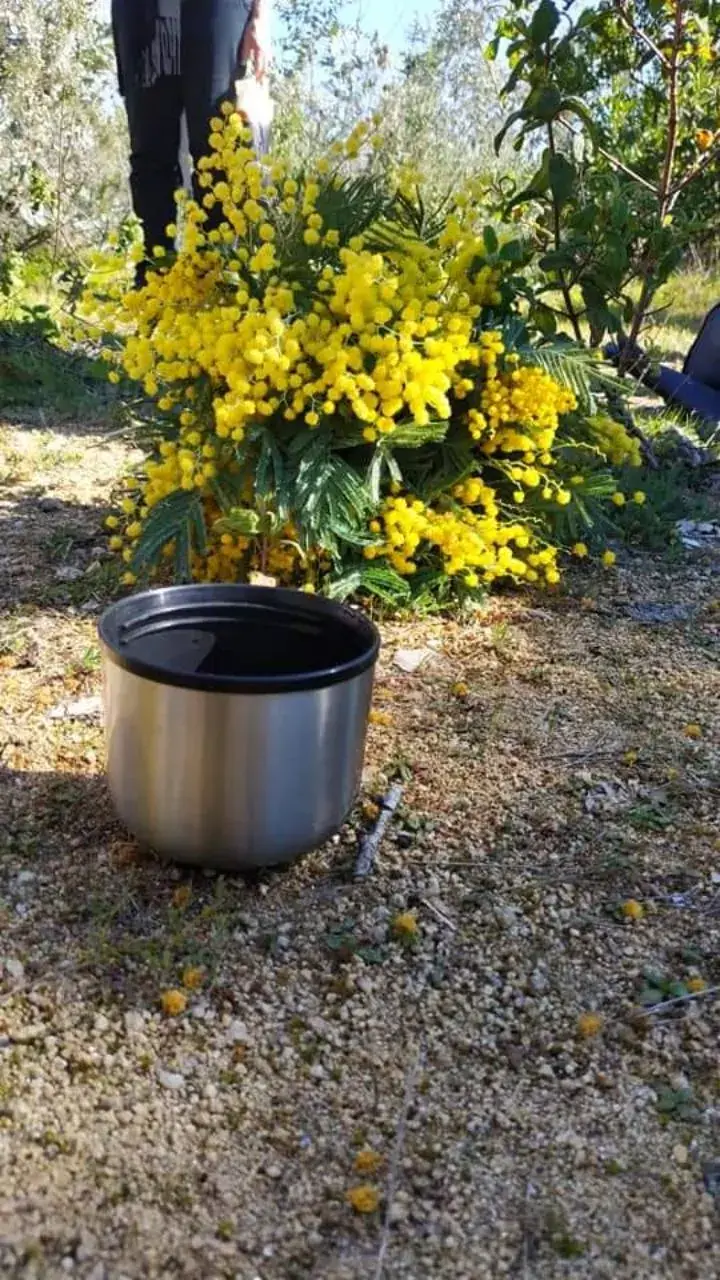
Which blossoms should you use?
This recipe is for correctly identified winter mimosa flowers (Acacia dealbata). The French National Museum of Natural History says its flowers are edible and its pods are not. Use only the small yellow blossoms from a known, untreated source.
Avoid florist bouquets, roadsides and treated areas. Pick a small amount without breaking branches, and do not taste the flowers if you are unsure of their identity.
Ingredients
One bowl of mimosa blossoms, with stems and leaves removed; 400 ml water; and sugar equal to twice the weight of the strained infusion. For example, if you have 300 g infusion, add 600 g sugar.
Method
Remove the blossoms and gently shake them to dislodge any tiny visitors. Bring the water to a boil, pour it over the flowers, cover and leave to infuse until completely cool.
Strain and weigh the infusion. Add twice its weight in sugar, then heat gently until dissolved. Bring to a gentle simmer for about 10 minutes, stirring. Pour into a clean, scalded bottle. Let cool and keep refrigerated. This homemade recipe is not presented as a shelf-stable preserve.
Pour, sip and taste
Dilute a small amount with still or sparkling water, or add a few drops to a dessert. Adjust to taste.
Maddy plans to share tastes of her syrup and jelly on Rando d’Azur mimosa hikes, subject to dates and availability. A golden winter treat from the French Riviera!
Frequently asked questions
What does mimosa syrup taste like?
Winter mimosa flowers are described as tangy. The syrup is floral and sweet; dilute it in water to taste.
Can I store the syrup at room temperature?
This home recipe does not establish a room-temperature shelf life. Once cooled, keep the bottle refrigerated and enjoy the syrup promptly.
Can I use the leaves or pods?
No. The recipe uses only correctly identified blossoms. The French National Museum of Natural History says the pods are not edible.
Plan your visit
Dates, programmes and access arrangements may change; check official sources before travelling.